Dry Fruits & Nuts — Line 01
Kashmiri saffron
Grown on the karewa plateaus of Pampore, hand-picked at dawn, and graded to ISO 3632 Category I. The most expensive spice on earth, bought without a middleman.
About the crop
Three threads per flower.
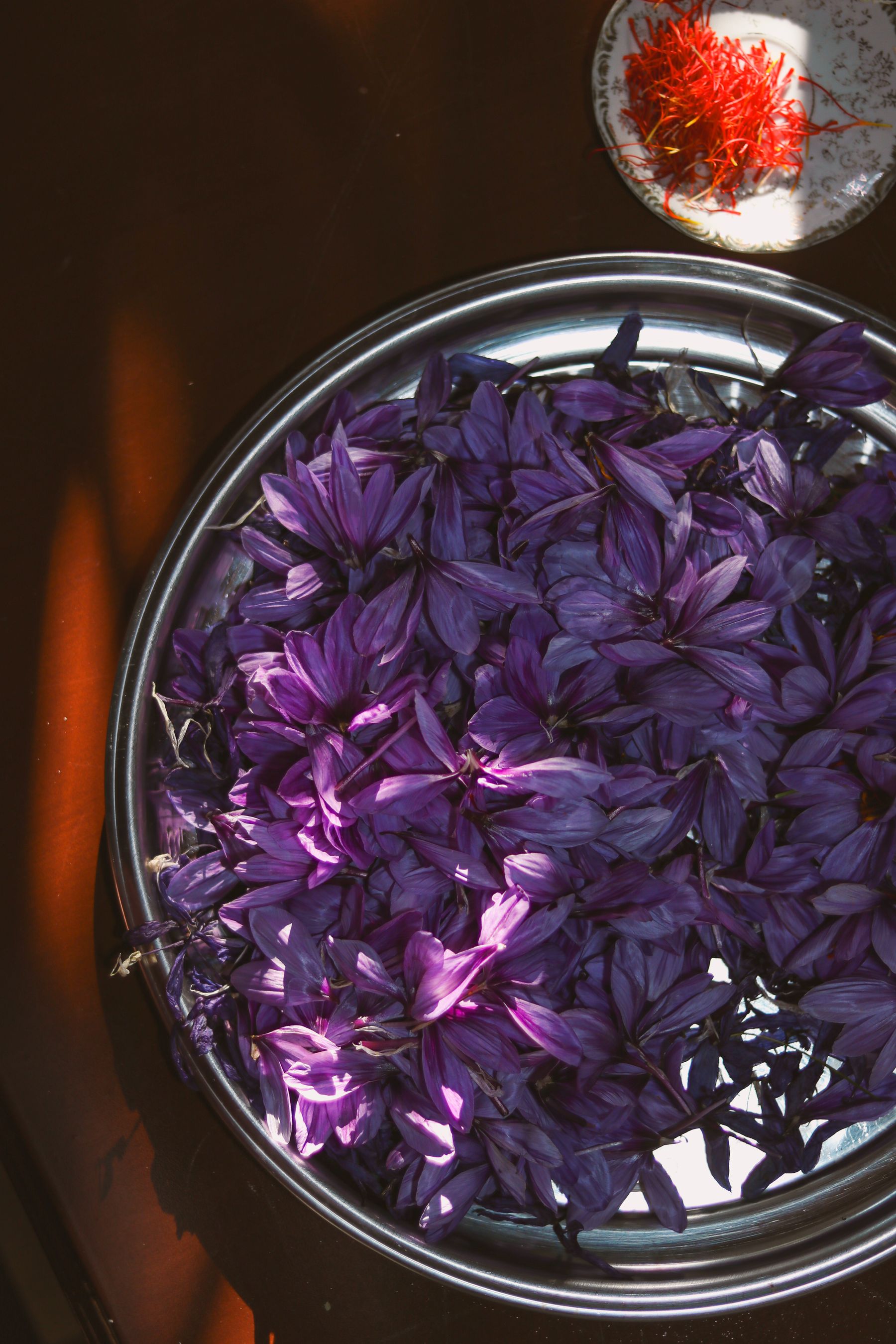
Saffron is the dried stigma of Crocus sativus. Each flower carries three, they must be picked by hand within hours of opening, and it takes something close to 150,000 flowers to make a kilo. Kashmir’s crop is small, late-flowering and unusually deep in colour — the karewa soil and the altitude give it a crocin reading that most origins cannot match, and an aroma closer to honey and hay than to the medicinal note of cheaper lots.
Because the margin on adulteration is so large, saffron is one of the most faked foods in the world — safflower, dyed corn silk, added moisture, and stigma bulked out with the yellow style. We buy graded lots with a laboratory report, and we will put that report in front of you before you commit to anything.
Grading
How saffron is measured.
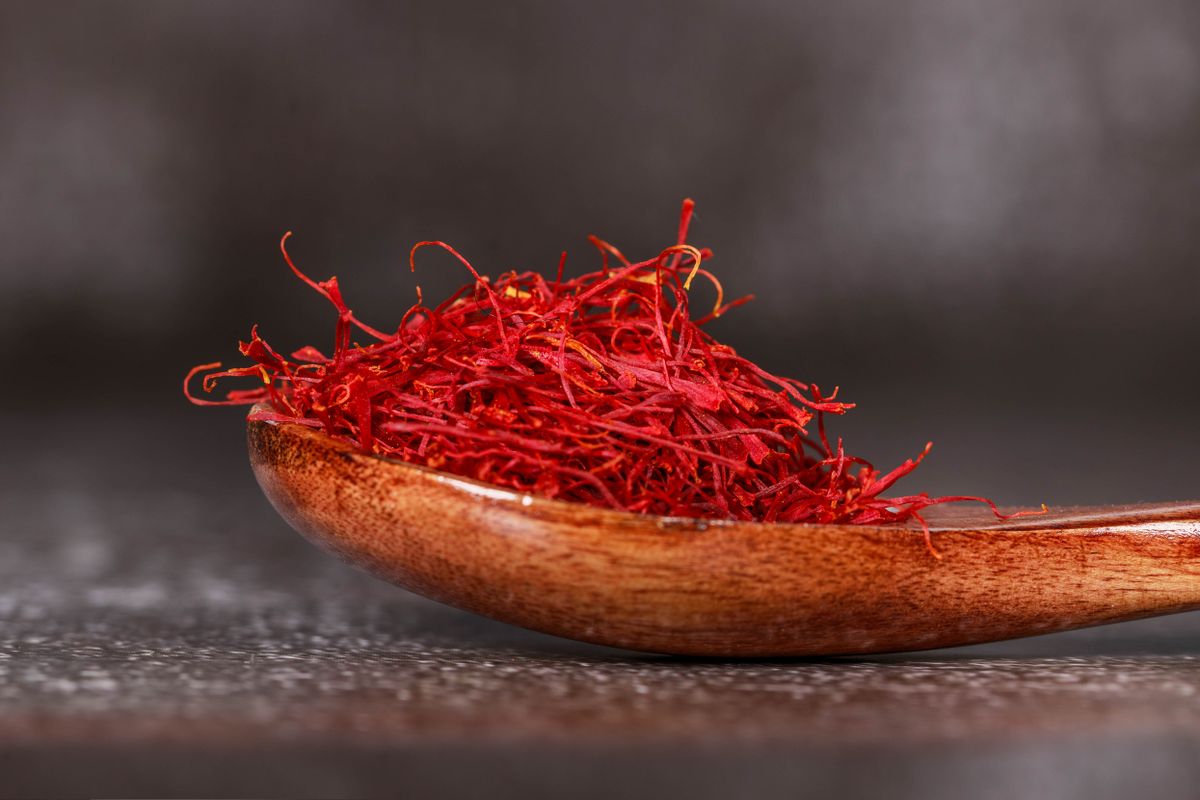
ISO 3632 grades saffron on three laboratory readings: crocin for colour, picrocrocin for taste and safranal for aroma. The colour figure is the one that moves the price.
| Grade | Crocin (colour) | Description | Typical use |
|---|---|---|---|
| Category I — MongraOur standard offer | ≥ 190 | Pure deep-red stigma, style removed, high aroma | Premium retail, gifting, saffron-forward dishes |
| Category I — Lachha | ≥ 190 | Red stigma with a short attached style | Food manufacture, blends, catering |
| Category II | 150–189 | Red with some yellow style present | Volume catering, infusions, colouring |
| Powdered | To specification | Milled Category I, sealed single-dose | Beverages, bakery, dairy and dosing lines |
Specification
ISO 3632 Category I as standard. Moisture below 10%. Style removed on Mongra grade. Laboratory report supplied with every lot.
Packing
Vacuum-sealed food-grade tins from 10 g to 1 kg, boxed for transit. Retail-ready and private-label packing available.
Applications
Premium retail and gifting, rice and biryani houses, bakery and dairy, saffron beverages, and cosmetic and supplement formulation.
Buying notes
Buying saffron without getting caught.
Saffron is the most adulterated food in the world by value, and the reason is arithmetic: at several thousand pounds a kilogram, a supplier who bulks a lot with safflower, dyed corn silk or a generous length of the yellow style makes more from the fraud than from the trade. Every buyer in this market needs a defence, and the defence is a laboratory report tied to a lot plus a physical sample you have tested yourself.
What the ISO 3632 report actually tells you
The standard grades saffron on three ultraviolet-visible readings taken on a water extract of the milled sample: crocin for colouring strength, picrocrocin for bitterness and taste, and safranal for aroma. Crocin is the figure that moves the price, and Category I requires a reading of at least 190. Ask for all three numbers rather than the crocin figure alone — a lot that is strong on colour and flat on aroma has usually been handled or stored badly.
Mongra and Lachha are cut grades, not quality grades
Both are Category I. Mongra is pure red stigma with the style removed; Lachha retains a short length of the yellow style. The style adds weight and contributes almost nothing to colour, taste or aroma, so a Lachha lot priced as Mongra is a quiet way of selling you filler at saffron prices. We state the cut on every quotation.
Test the sample before you order
Drop a few threads into cold water. Real saffron releases colour slowly over several minutes and the threads stay red; dyed material colours the water almost immediately and the threads go pale. Rub a thread between damp fingertips — a yellow-orange stain is right, a red stain means added dye. It tastes bitter, never sweet. Five minutes of this tells an experienced buyer more than a photograph ever will, which is exactly why we put the laboratory report in front of you before we ask for an order. There is a fuller guide in how to spot fake saffron.
FAQ
Questions buyers ask
How can I tell if saffron has been adulterated?
Use the water test: real saffron releases its colour slowly over several minutes while the threads themselves stay red, whereas dyed material colours the water almost instantly and the threads fade. Check the thread shape under magnification — a true stigma is trumpet-shaped and serrated at one end, while safflower florets are flat. Rub a thread on damp skin: a yellow-orange stain is correct, a red stain means added dye. And taste it, because saffron is bitter and never sweet.
What is the difference between Mongra and Lachha saffron?
Both are ISO 3632 Category I. Mongra is pure red stigma with the yellow style removed. Lachha retains a short length of style, which adds weight but contributes almost no colour, taste or aroma. Mongra therefore costs more per kilogram and is worth it wherever the saffron is visible or dosed by weight.
What crocin level should I specify?
Category I requires a crocin reading of at least 190, and that is our standard offer. Category II sits between 150 and 189 and is a reasonable choice for volume catering or infusions where colour intensity matters less than price. Below that, you are buying colour rather than saffron.
How should saffron be stored?
Airtight, away from light and heat, and ideally in the vacuum tin it arrived in. Saffron loses aroma and crocin steadily on exposure to light and air, so a tin opened repeatedly on a warm kitchen line will be measurably weaker within months. Buy quantities matched to your turnover rather than to the price break.
Do you supply powdered saffron?
Yes, milled Category I in sealed single-dose sachets, to order. Powder is convenient for beverages, bakery and dosing lines but it is also the easiest form to adulterate, so we supply it only against the same ISO 3632 report as the threads and we would encourage you to buy threads wherever your process allows.
What is the minimum order?
One pallet per line. On a first order we will accept a mixed pallet across two or more lines so you can trial several products without committing a full pallet to each.
What testing is done before shipment?
Aflatoxin, pesticide residue, moisture, microbiology and foreign-matter screening as standard, certified against the lot you are buying. We test at origin before the goods ship rather than after they land, because a failed consignment sitting at a UK port costs far more than the testing ever did.
Who handles importing and customs?
Aarleez Ltd is the importer of record. We clear GB import controls and quote delivered duty paid to your address in sterling, so the number you accept is the number you pay. Ex-warehouse collection is available if you would rather run your own leg.
Can you pack under our own brand?
Yes. Retail-ready and private-label packing is available from origin, including nitrogen flush where shelf life matters. Send your artwork and pack format and we will quote the packed price rather than a bulk price plus a vague conversion cost.
Also in the range
The rest of the dry fruit range.
Next step
Ask for a saffron quotation.
We will send the lot’s laboratory report and a delivered price before you buy a gram.